
Station 03 of 8
Hand Measurements
Hand length and width, plus grip strength
Hand Length (cm)Hand Width (cm)Grip Strength (Left) (kg)Grip Strength (Right) (kg)
At This Station
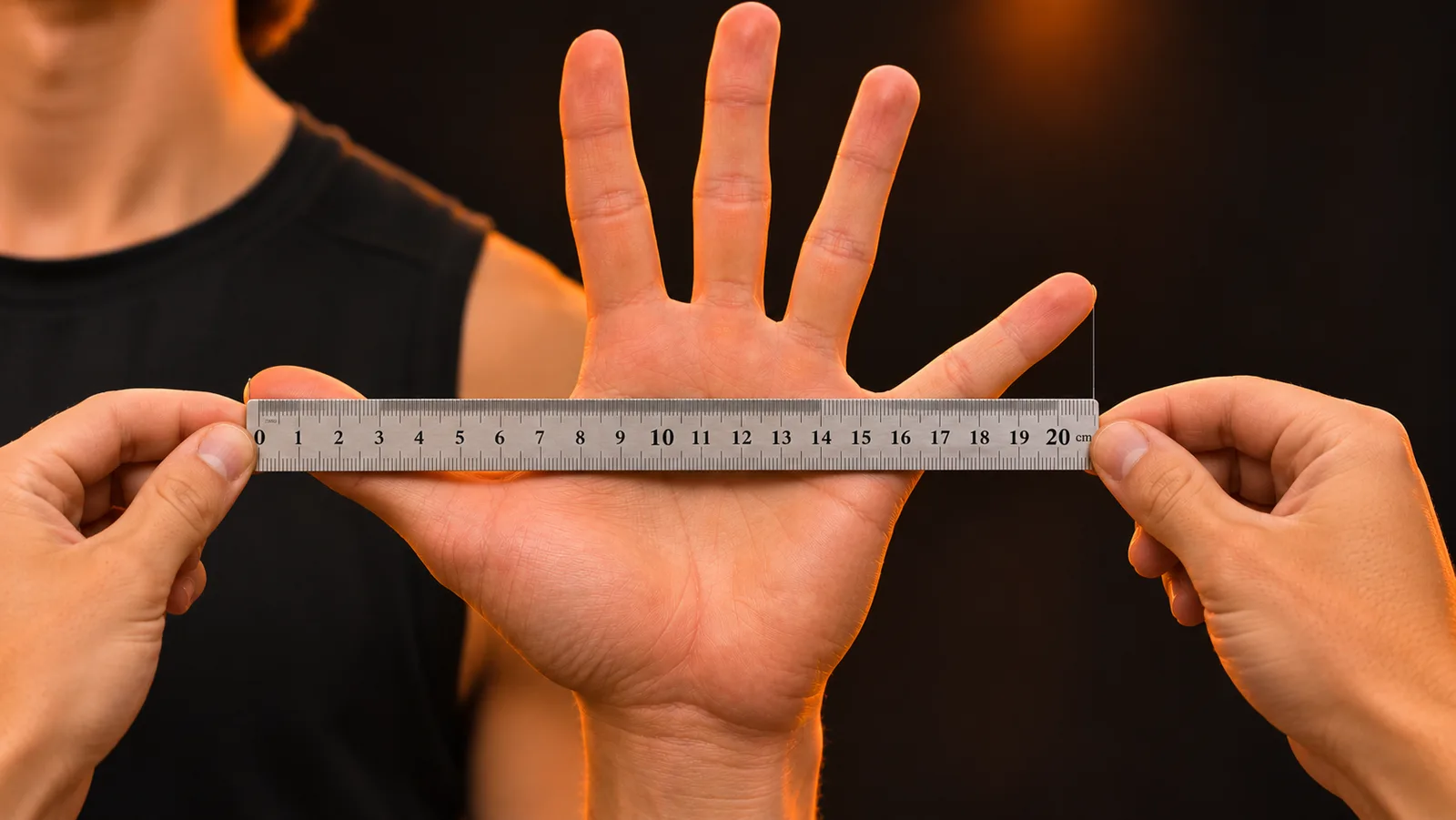
What It Measures and Why It Matters
Hand size affects ball control and how comfortably you can palm the ball, and it's one of the more fixed physical traits recorded at a combine — not something training changes much. Grip strength is the opposite: it's trainable, and it's what holds the ball through contact and finishes strong around the rim. Measured in both hands because a left/right difference is worth knowing in itself.
Setup
- A flat measuring board or tape on a table
- A hand dynamometer
How It's Run
- 1Place your hand flat on the measuring surface, fingers spread naturally.
- 2Length: measured from the base of your palm to the tip of your middle finger.
- 3Width: measured from the tip of your thumb to the tip of your little finger, fingers spread wide.
- 4Grip: hold the dynamometer with your arm by your side and your elbow straight, then squeeze as hard as you can for a couple of seconds.
- 5Repeat the squeeze with the other hand, then do a second attempt on each side.
Attempts
One reading each for hand length and hand width. Two squeezes per hand for grip strength — the best of the two counts.
Tips for a Good Result
- Spread your fingers fully for the width measurement — a relaxed hand reads smaller than it should.
- For grip, squeeze in one hard effort rather than building up slowly, and don't swing the arm or lean into it.
Safety
- The measurements themselves are static, but grip strength is a maximal effort — tell staff about any wrist, hand or forearm injury before you squeeze.
- Stop if you feel pain in the wrist or forearm rather than pushing through it.