What to Expect

What happens on the day

Everything you need to know before your Athlete Combine session — what to bring, how testing works, and how your results come back.

How it works

From booking to your next retest.

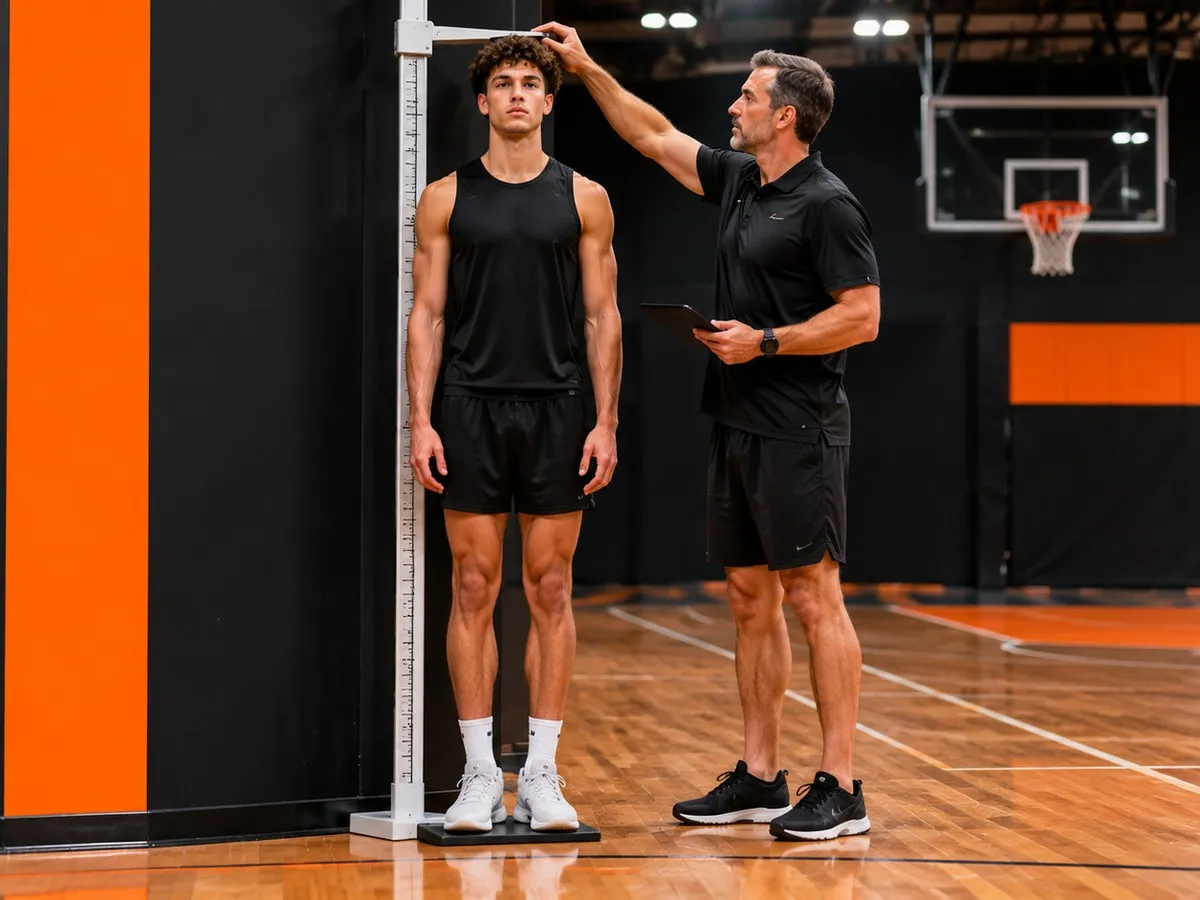
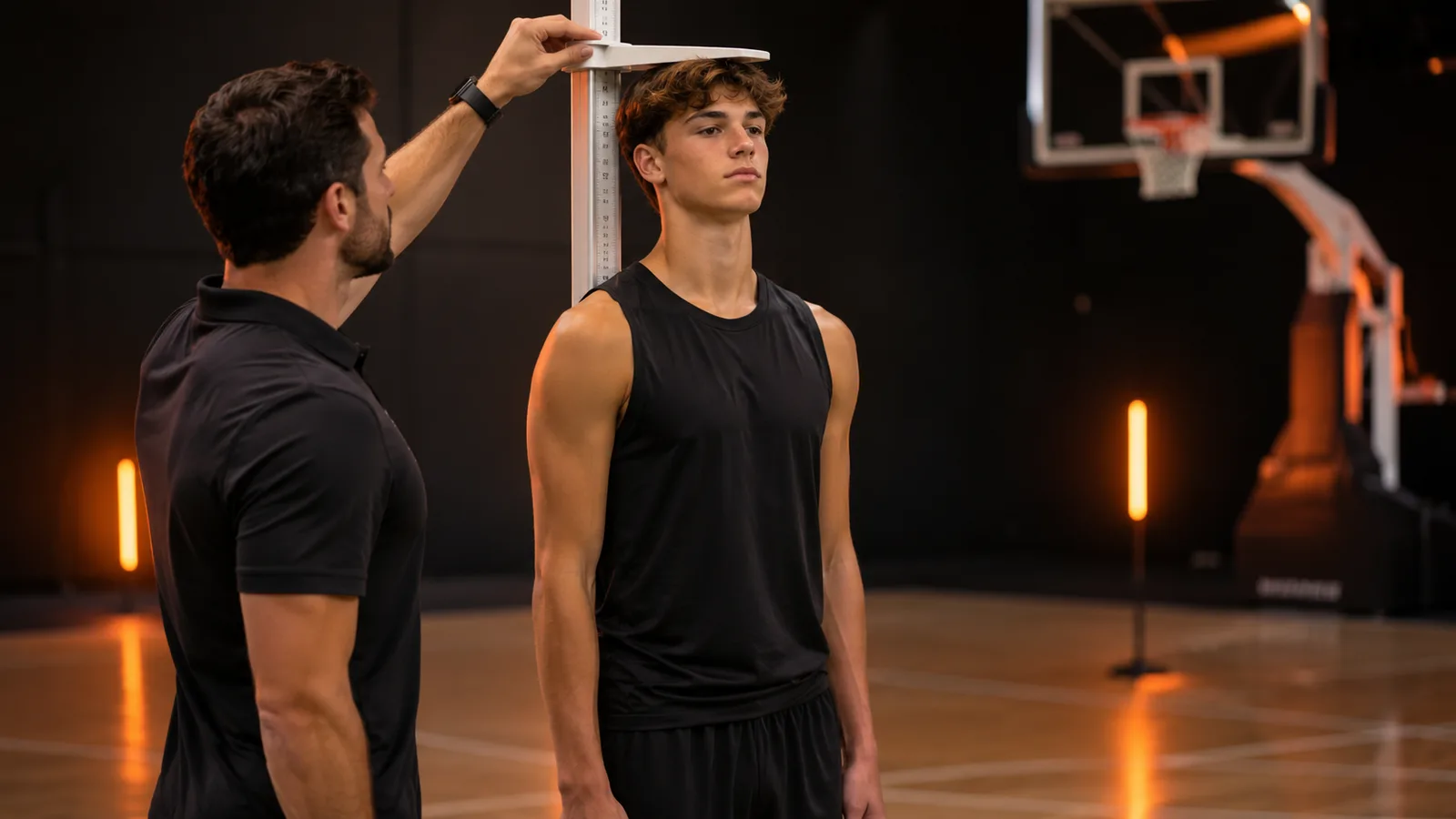
  1. An athlete's height being measured against a stadiometer by staff
    01

    Book online

    Pick a combine, choose a session time, and pay online. You'll get a confirmation email with everything you need for the day.

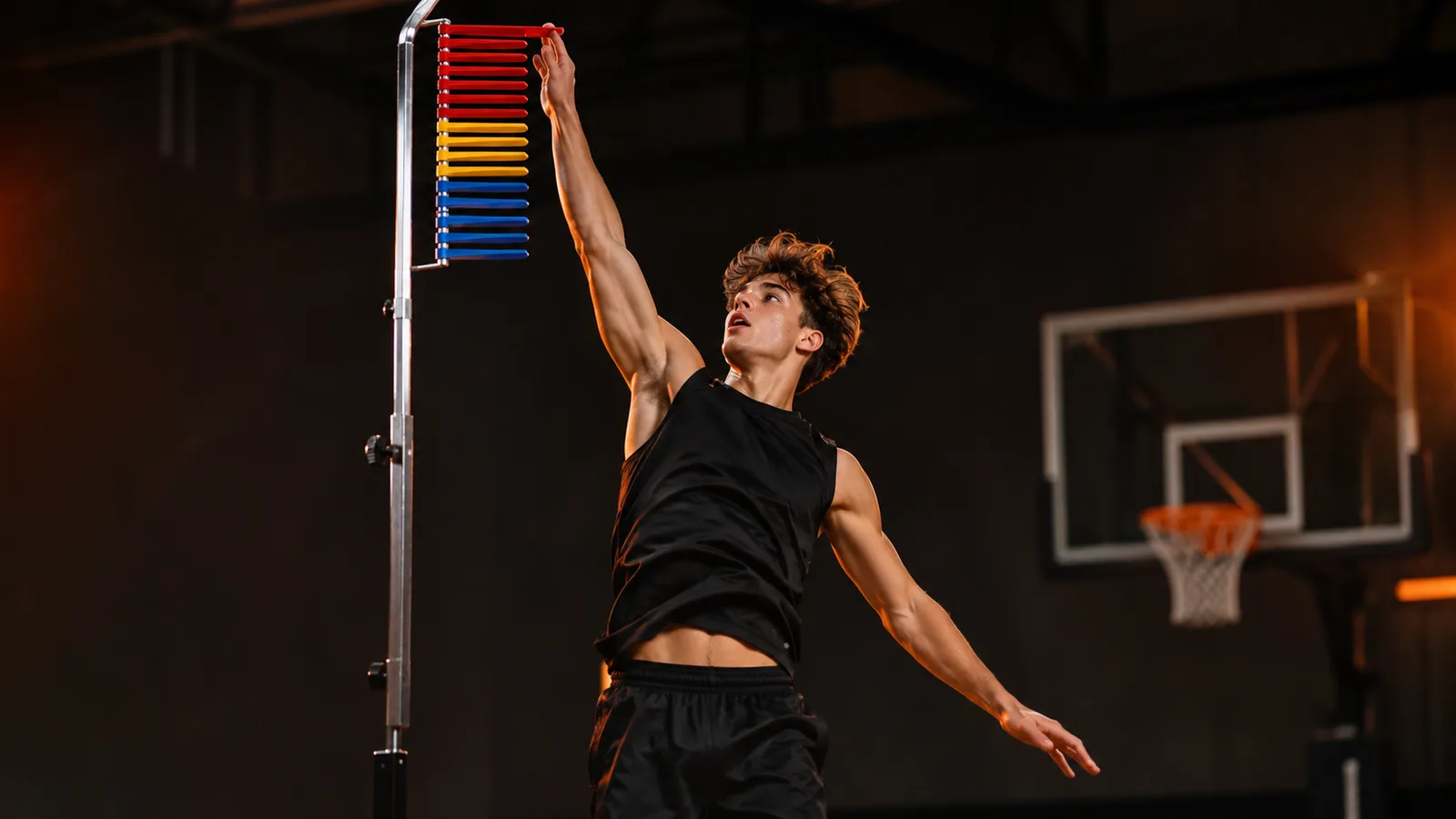
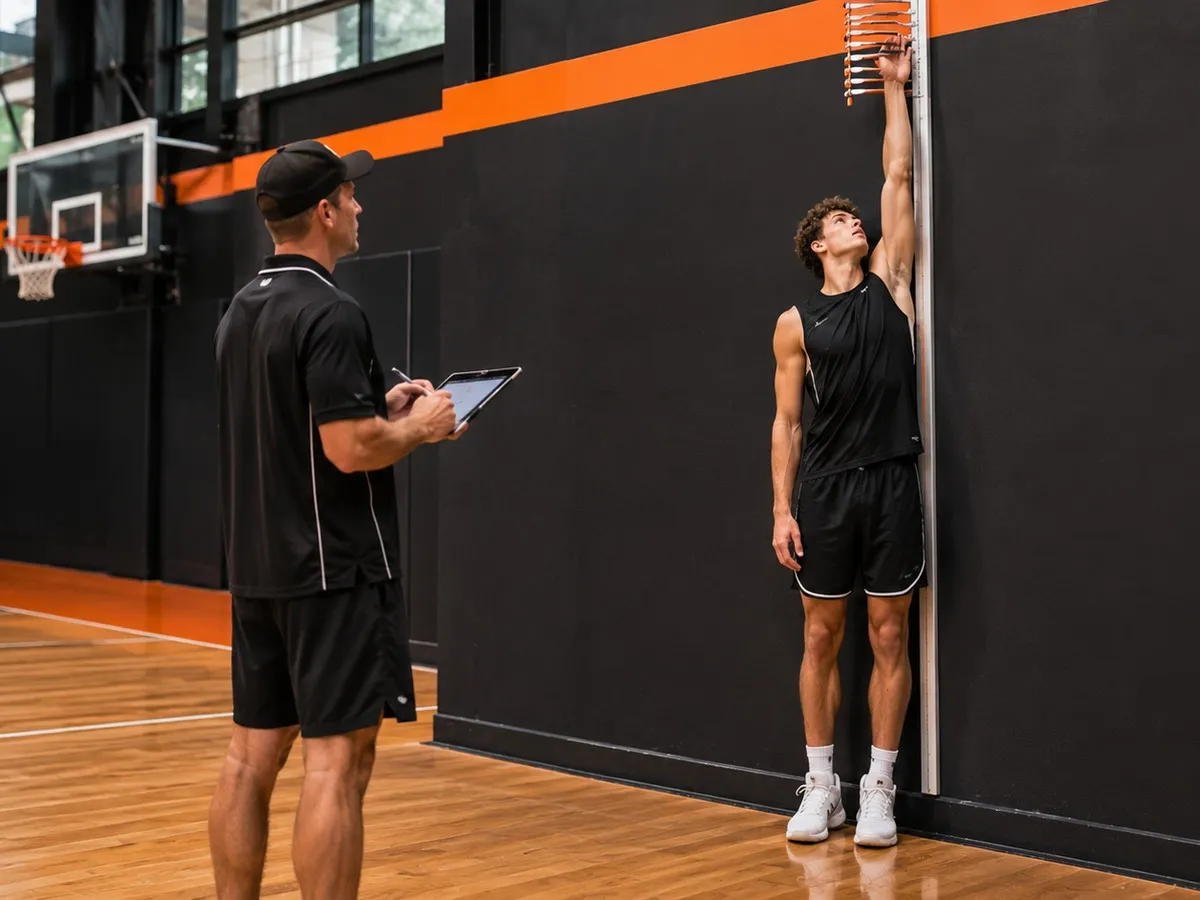
  2. An athlete reaching the vanes of a Vertec jump device
    02

    Test day (8 stations)

    Check in, warm up with your group, then rotate through all 8 stations with staff recording every measurement.

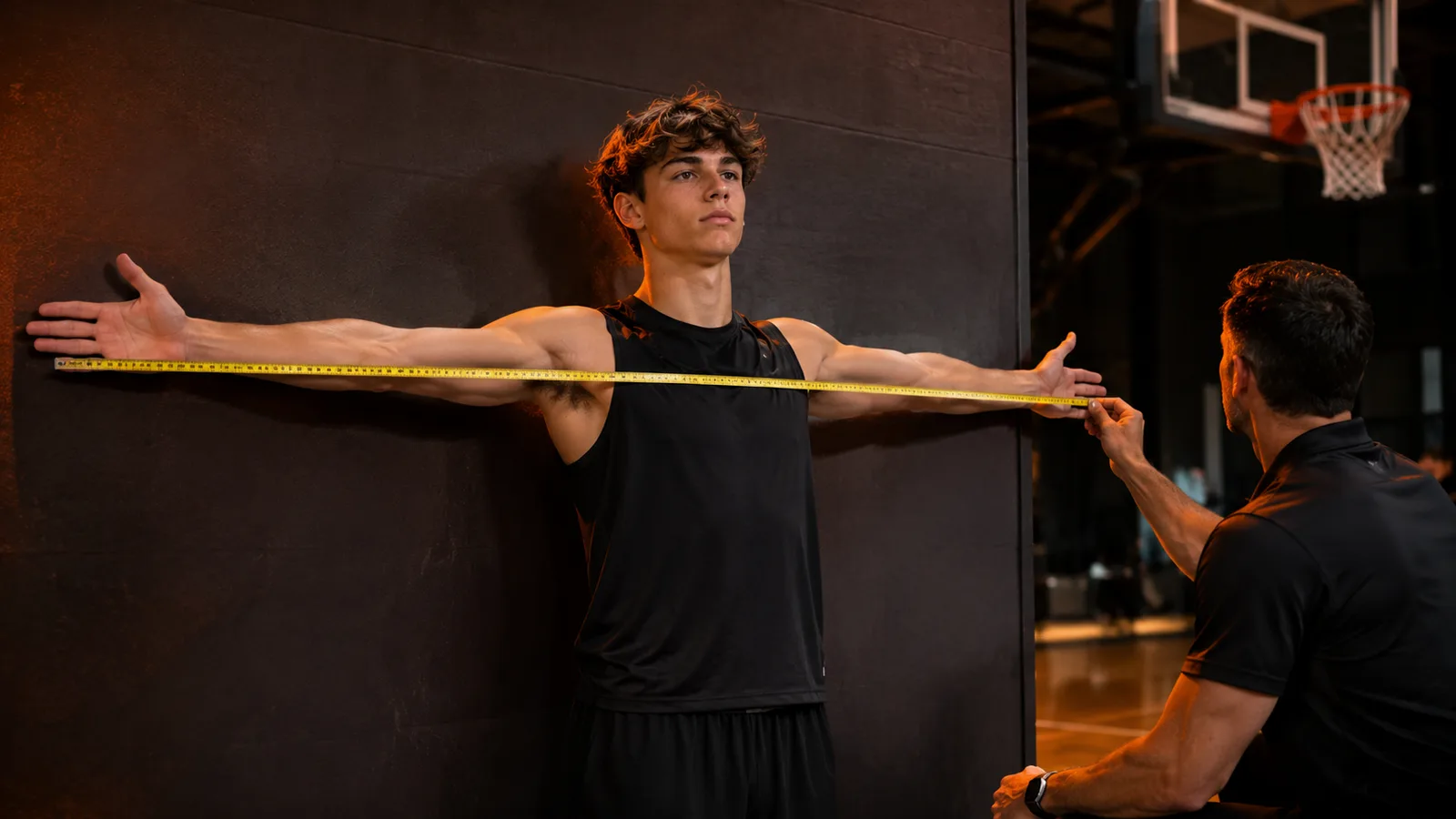
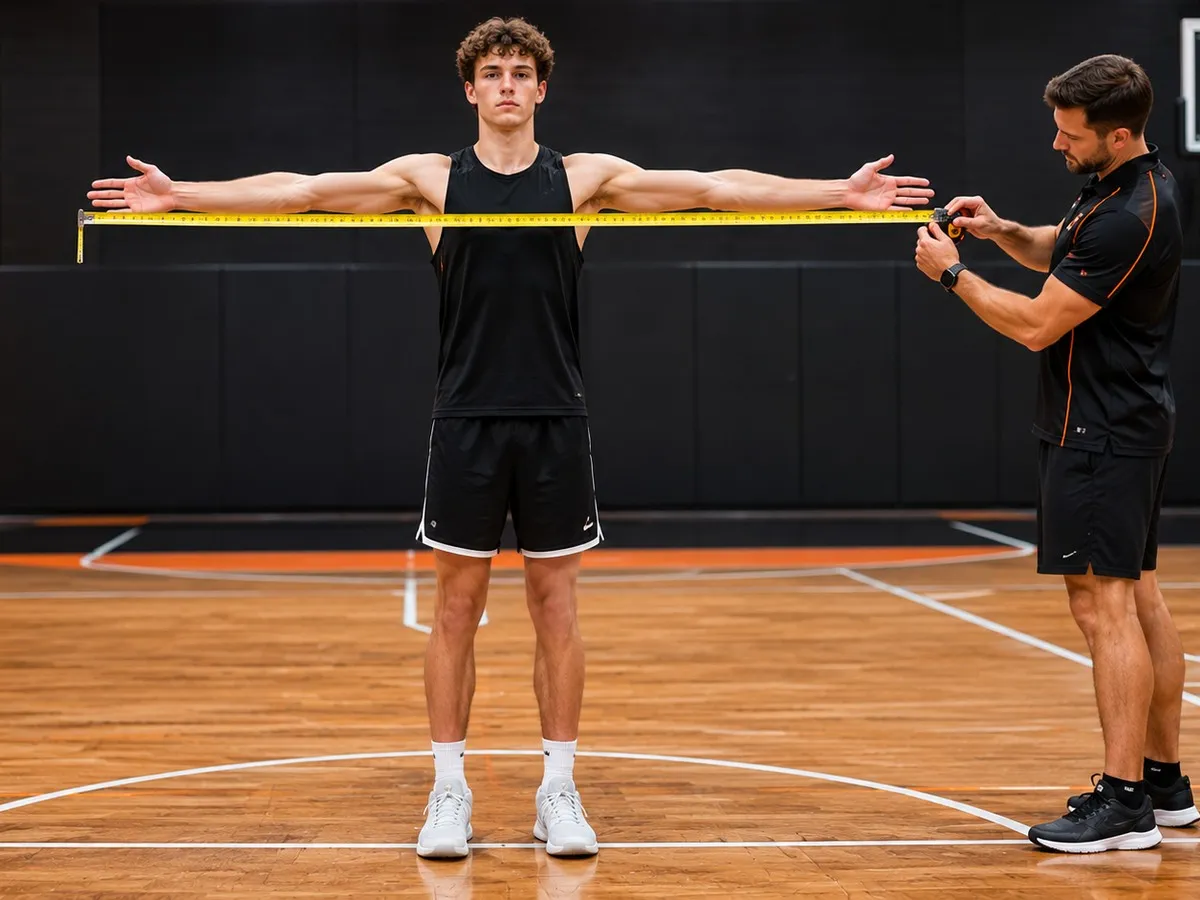
  3. An athlete's wingspan being measured fingertip to fingertip against a wall
    03

    Results + Player Card

    Staff review every result before it's released. Your numbers land on your Player Card — yours to view any time, and to share.

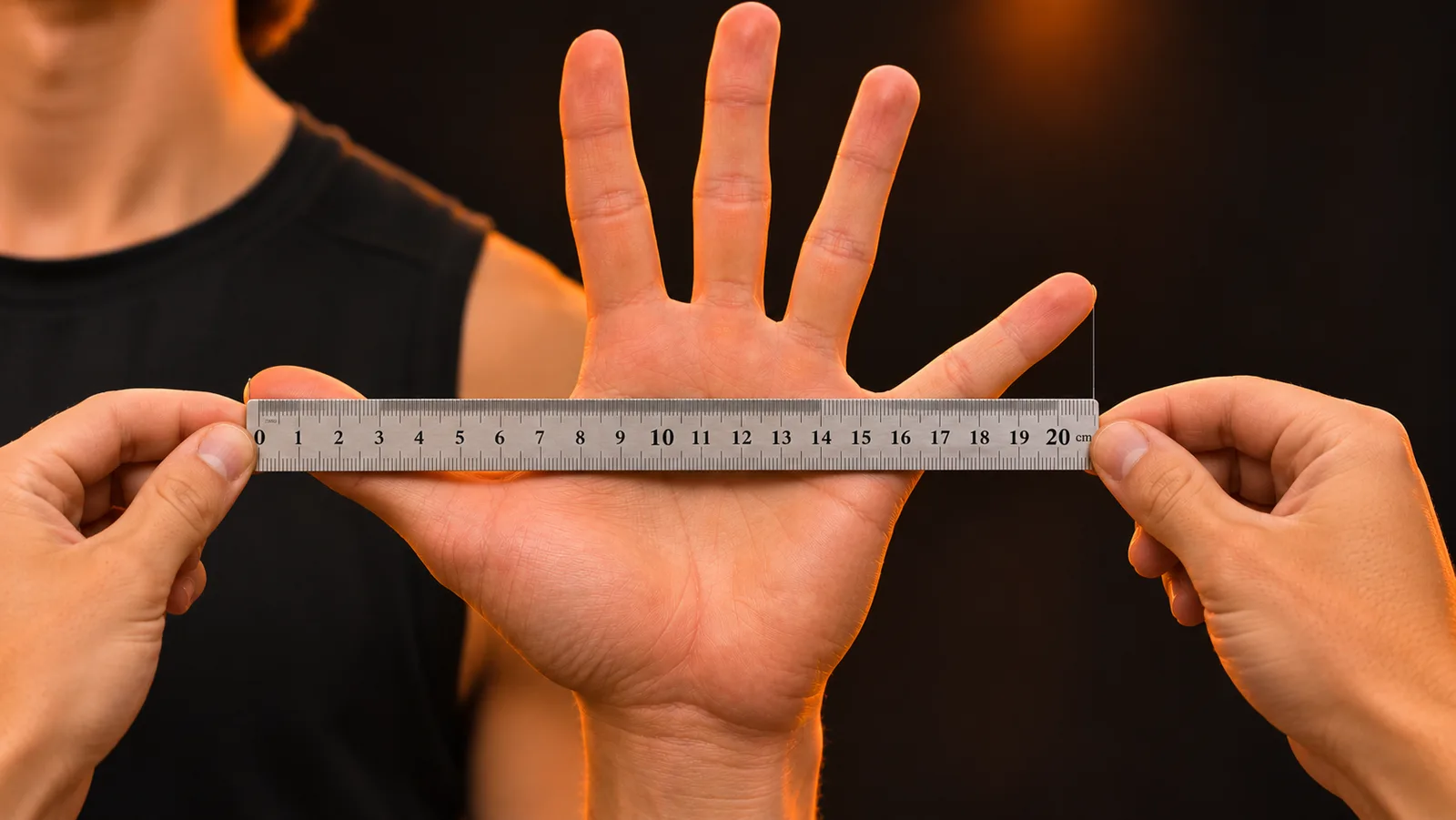
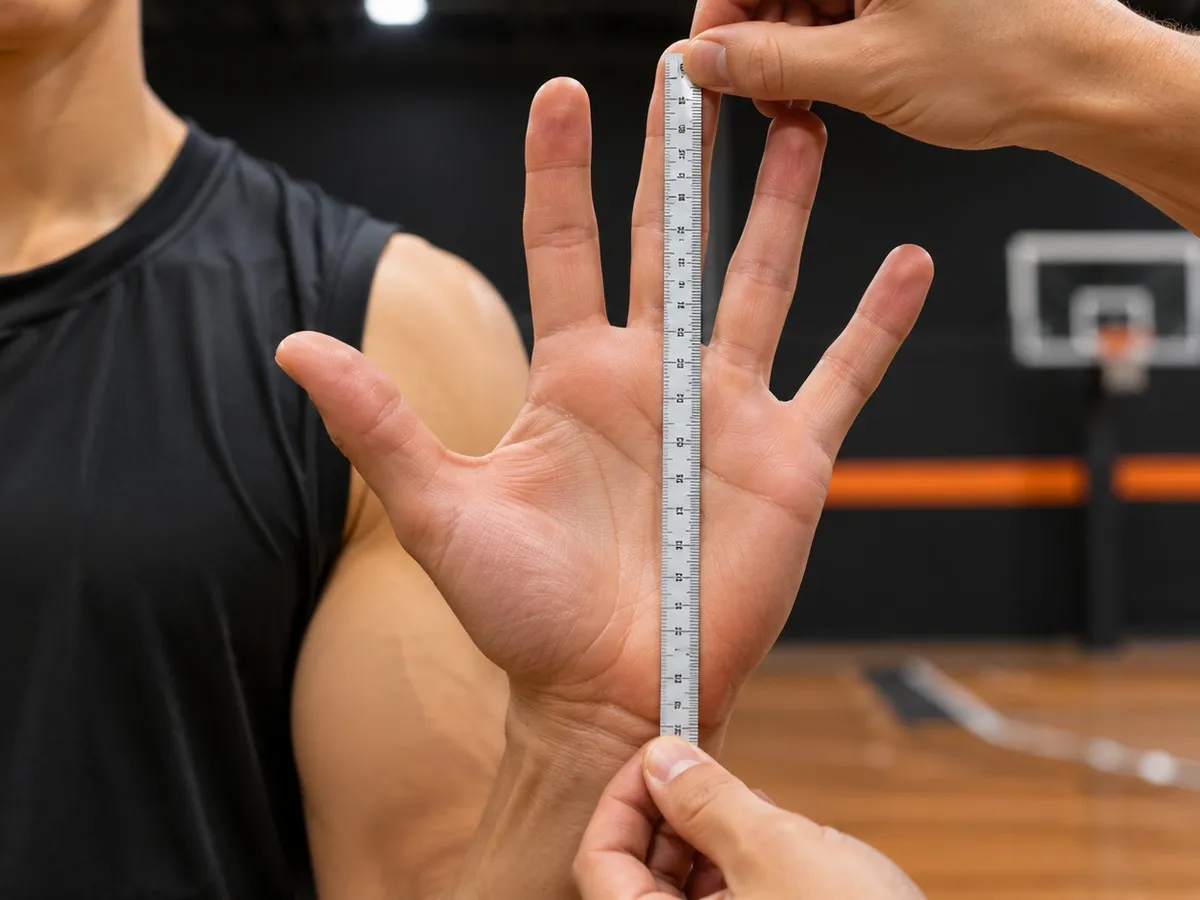
  4. An athlete's hand span being measured with a steel rule
    04

    Quarterly retests

    Most athletes do quarterly retests, so they can see what's actually changed rather than guessing. Each combine is a separate booking.

The Day at a Glance

  1. 1

    Arrive 15 minutes early

    Gives you time to check in and settle in before your session starts.

  2. 2

    Check in and get your wristband

    Staff check you in against your booking and assign your wristband at the Check-In desk.

  3. 3

    Group warm-up

    A short warm-up with your session group before testing starts.

  4. 4

    Rotate through all 8 stations

    Your group moves through every station together. Testing runs across 2 courts — you start on the first and move to the second as the next group starts, so you're not queuing.

  5. 5

    Results released after staff review

    Staff check every result before it's released to your Player Card — this isn't instant, but it won't take long.

A new session starts every 30 minutes, with up to 20 athletes in each one. You're on court for about 35–45 minutes. Testing runs across 2 courts — your group starts on the first court and moves to the second as the next group starts, so there's no waiting around.

What to Wear and Bring

  • Court shoes (non-marking soles)
  • Athletic clothing you can move freely in
  • A water bottle
  • A snack
  • No jewellery — rings, watches and dangling earrings come off before testing
  • Parent or guardian present for athletes under 18

The 16 Measurements

Every athlete is measured on all 16, across 8 stations, in this order. Tap a station tag for the full drill detail.

  • A staff member holding a tablet measures a young athlete's height against a wall-mounted stadiometer beside a basketball court.
    Station 1 · Height & Weight

    Height

    cm
    What it is
    Standing height, measured barefoot.
    Why it matters
    Your baseline for tracking growth between combines.
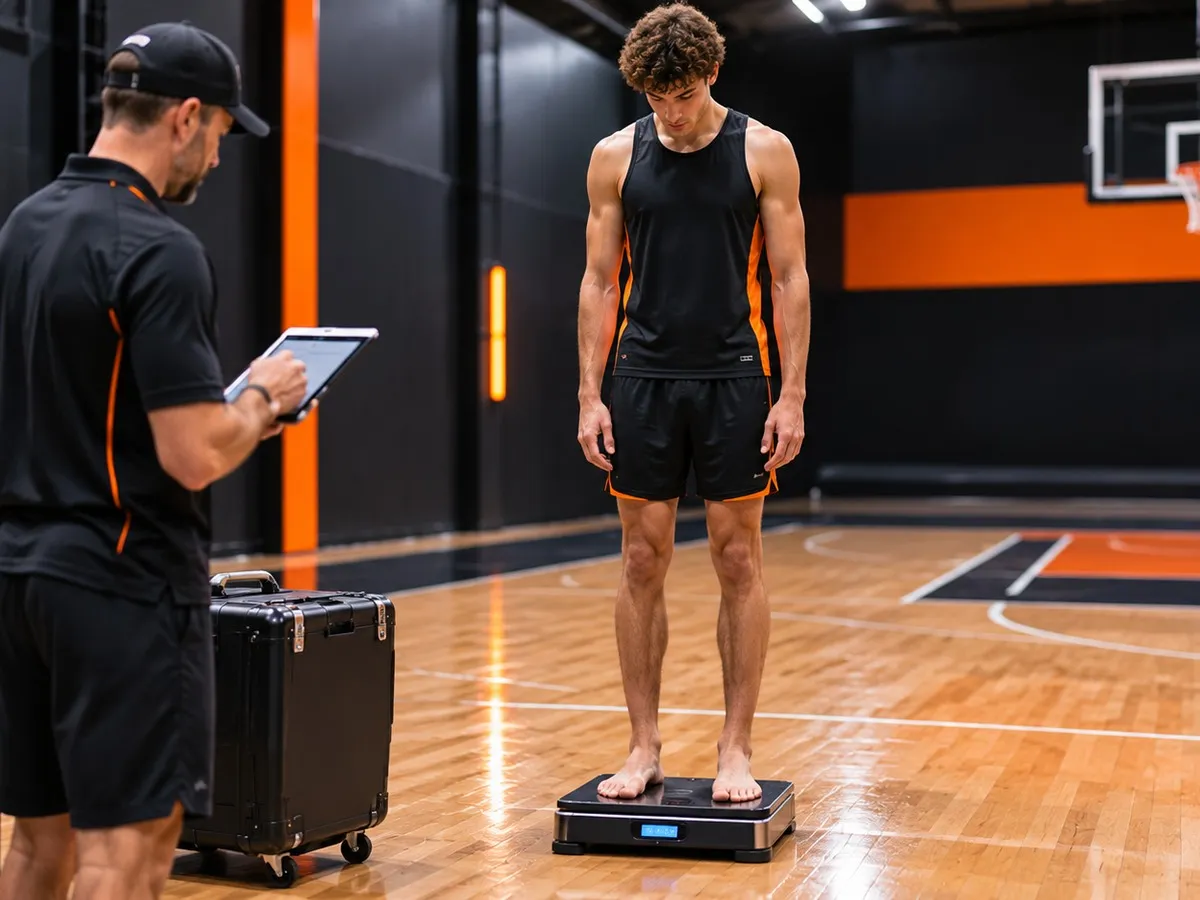
  • A barefoot athlete stands still on a digital scale on a basketball court while a staff member records the reading on a tablet.
    Station 1 · Height & Weight

    Weight

    kg
    What it is
    Body weight on a digital scale.
    Why it matters
    Tracks physical development. Private: never shown on Player Cards or leaderboards.
  • An athlete stands with both arms stretched out wide on a basketball court while a staff member runs a tape measure from one fingertip to the other.
    Station 2 · Wingspan & Reach

    Wingspan

    cm
    What it is
    Fingertip to fingertip with arms stretched out wide.
    Why it matters
    Length helps you defend, rebound and finish around the rim.
  • An athlete stands flat-footed against a wall-mounted reach board and stretches one arm overhead while a staff member records the height.
    Station 2 · Wingspan & Reach

    Standing Reach

    cm
    What it is
    How high you reach with one arm, flat-footed.
    Why it matters
    The starting point every vertical jump is measured from.
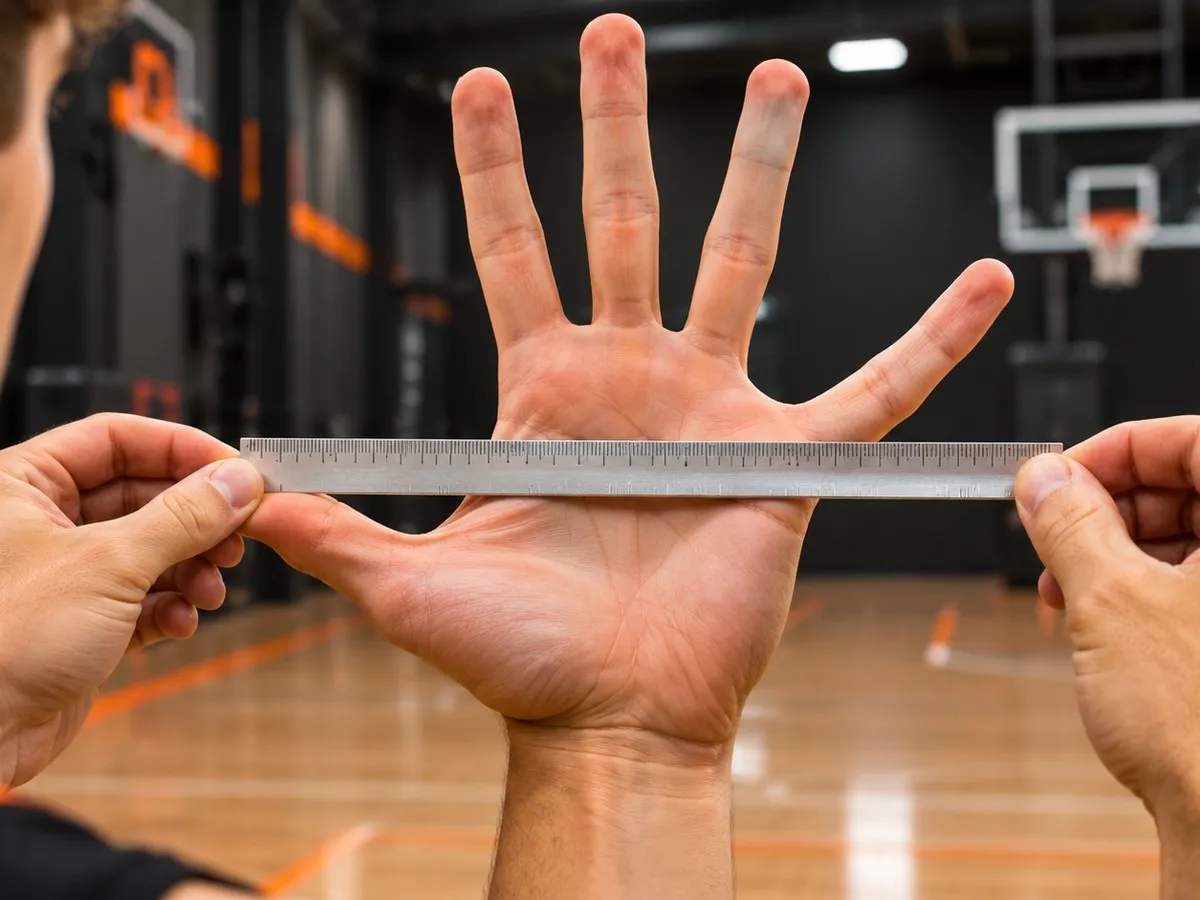
  • A steel rule held flat against an athlete's open palm, measuring from the base of the palm to the tip of the middle finger.
    Station 3 · Hand

    Hand Length

    cm
    What it is
    Base of the palm to the tip of the middle finger.
    Why it matters
    Bigger hands mean better ball control and catching.
  • A steel rule held across an athlete's spread fingers, measuring the span from thumb tip to little-finger tip.
    Station 3 · Hand

    Hand Width

    cm
    What it is
    Thumb tip to little-finger tip, fingers spread.
    Why it matters
    Affects grip, handling and palming the ball.
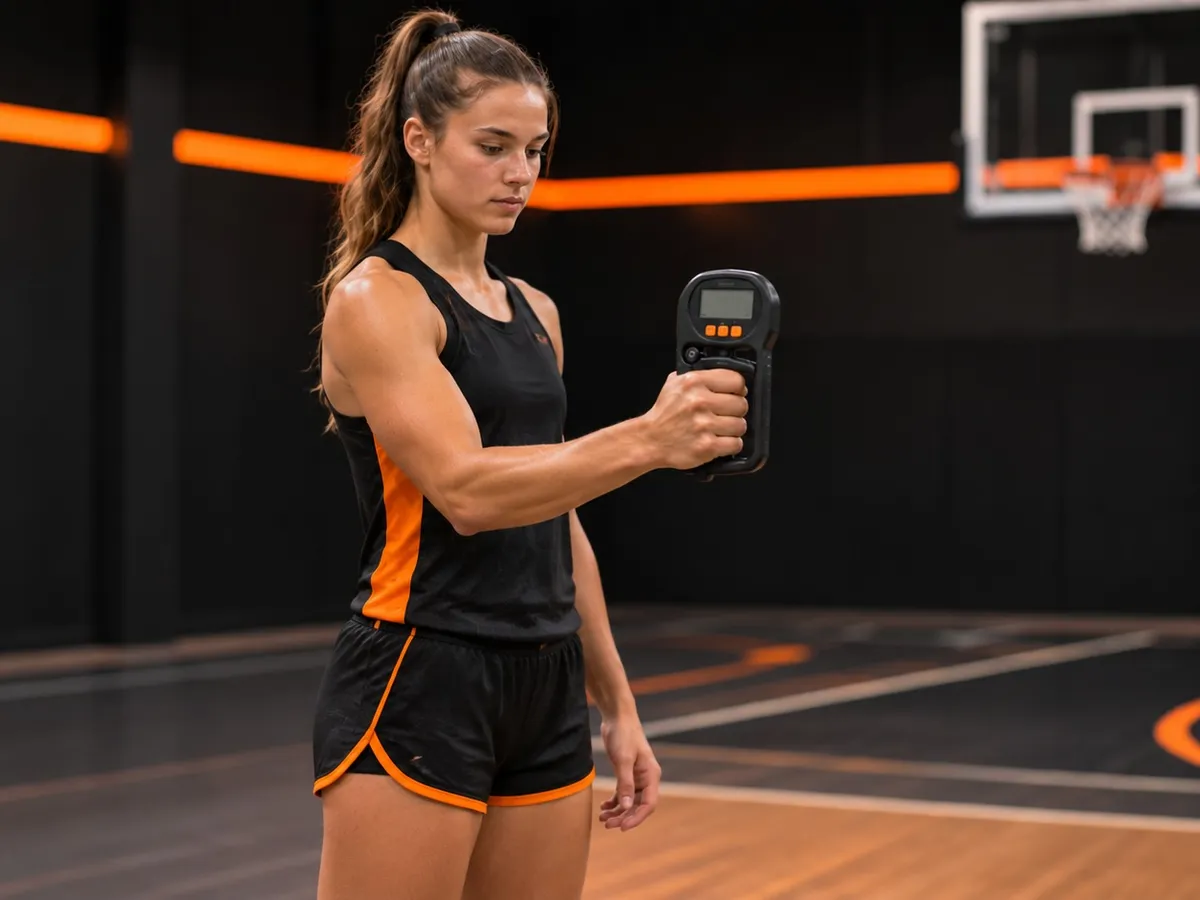
  • A female athlete on a basketball court squeezing a handheld dynamometer at arm's length, watching the digital readout.
    Station 3 · Hand

    Grip Strength

    kg
    What it is
    Squeeze a hand dynamometer as hard as you can, best of 2 per hand.
    Why it matters
    Grip and forearm strength for holding the ball through contact and finishing strong.
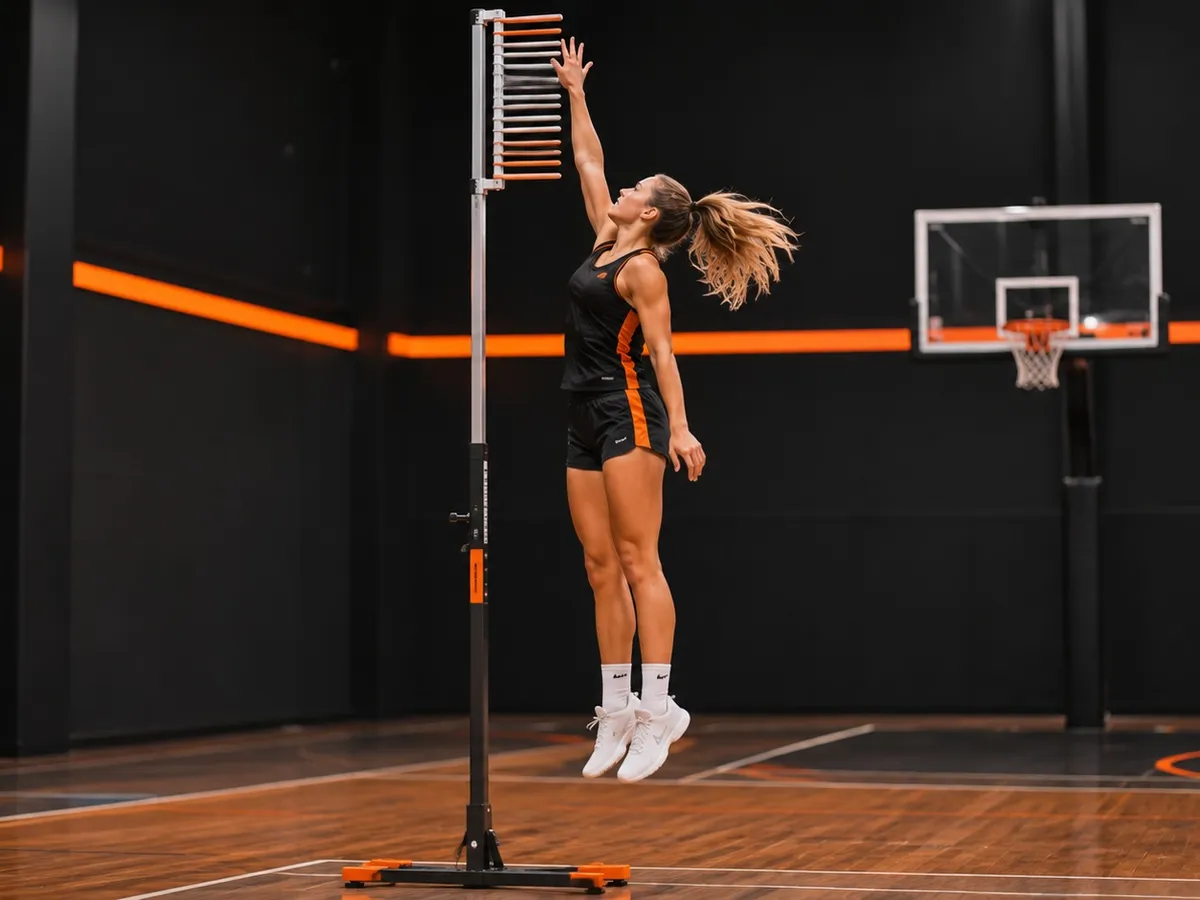
  • A female athlete at the top of a jump on a basketball court, reaching up to swat the coloured vanes of a Vertec jump device.
    Station 4 · Vertical Jump

    Max Vertical

    cm
    What it is
    Highest jump with a step or approach.
    Why it matters
    Your best jumping height from a short run-up.
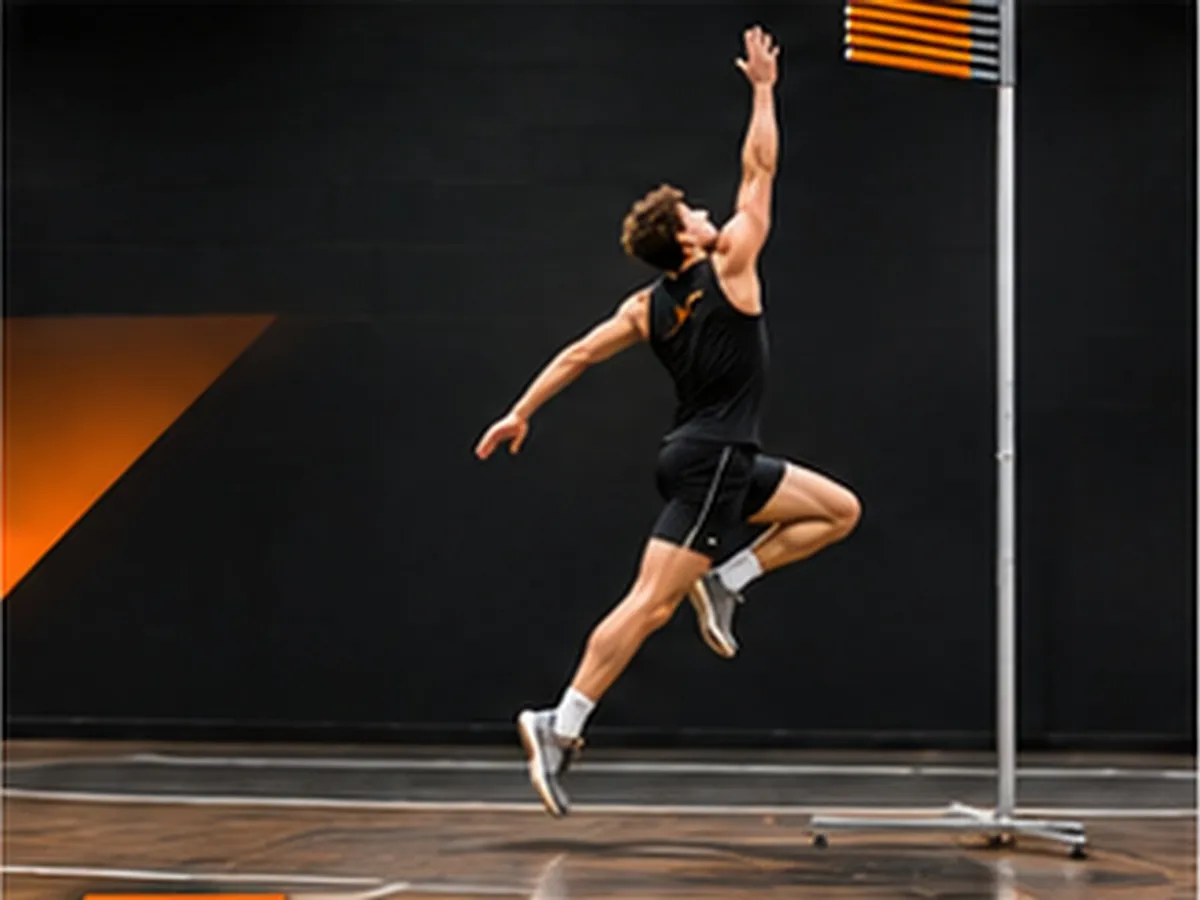
  • An athlete jumping off a full run-up with one knee driving upward, reaching for the vanes of a Vertec jump device.
    Station 4 · Vertical Jump

    Running Vertical

    cm
    What it is
    Jump off a full run-up.
    Why it matters
    Game-speed explosiveness, like finishing on a fast break.
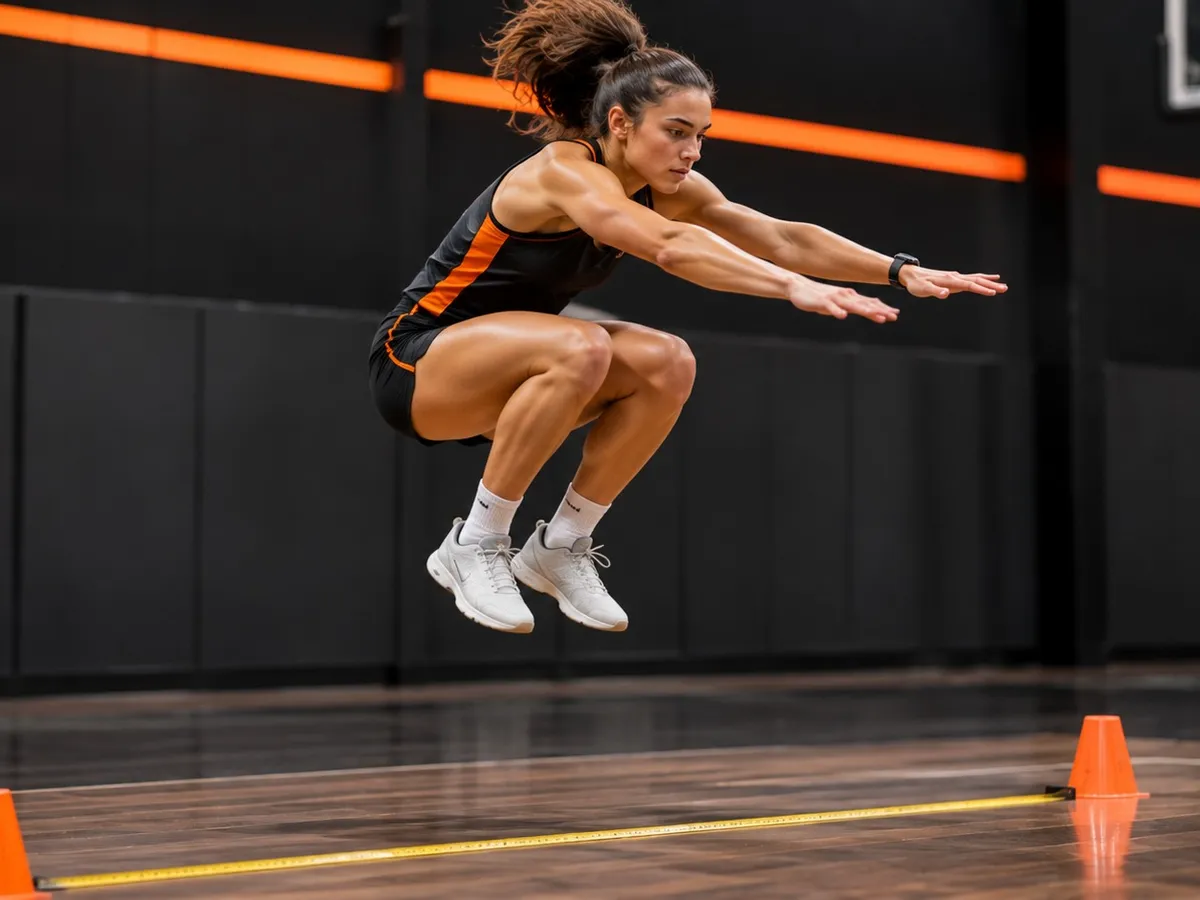
  • A female athlete mid-flight in a standing broad jump on a basketball court, knees tucked and both arms swung forward over a tape measure on the floor.
    Station 5 · Broad Jump

    Standing Broad Jump

    cm
    What it is
    Two-foot jump forward from standing.
    Why it matters
    Horizontal power for first steps and acceleration.
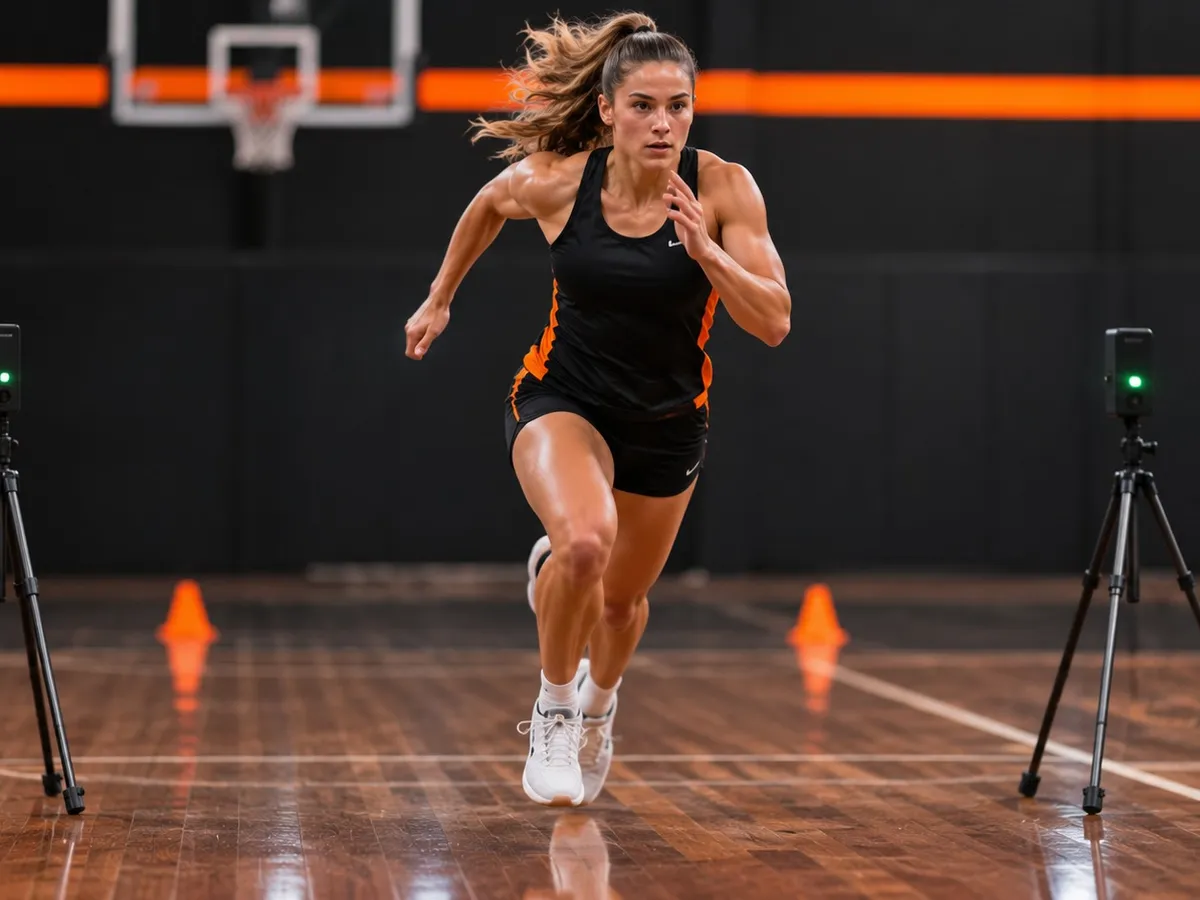
  • An athlete accelerating hard out of the start, passing an electronic timing gate with cones marking the sprint lane.
    Station 6 · Sprint

    5 m Split

    s
    What it is
    Time to cover the first 5 m.
    Why it matters
    First-step quickness.
  • An athlete sprinting at full speed between two electronic timing gates on a marked straight lane.
    Station 6 · Sprint

    10 m Split

    s
    What it is
    Time to 10 m.
    Why it matters
    Acceleration: how quickly you reach top gear.
  • A female athlete sprinting at full speed on a basketball court between two electronic timing gates showing green lights.
    Station 6 · Sprint

    20 m Sprint

    s
    What it is
    Time to 20 m.
    Why it matters
    End-to-end speed, roughly the length of a court.
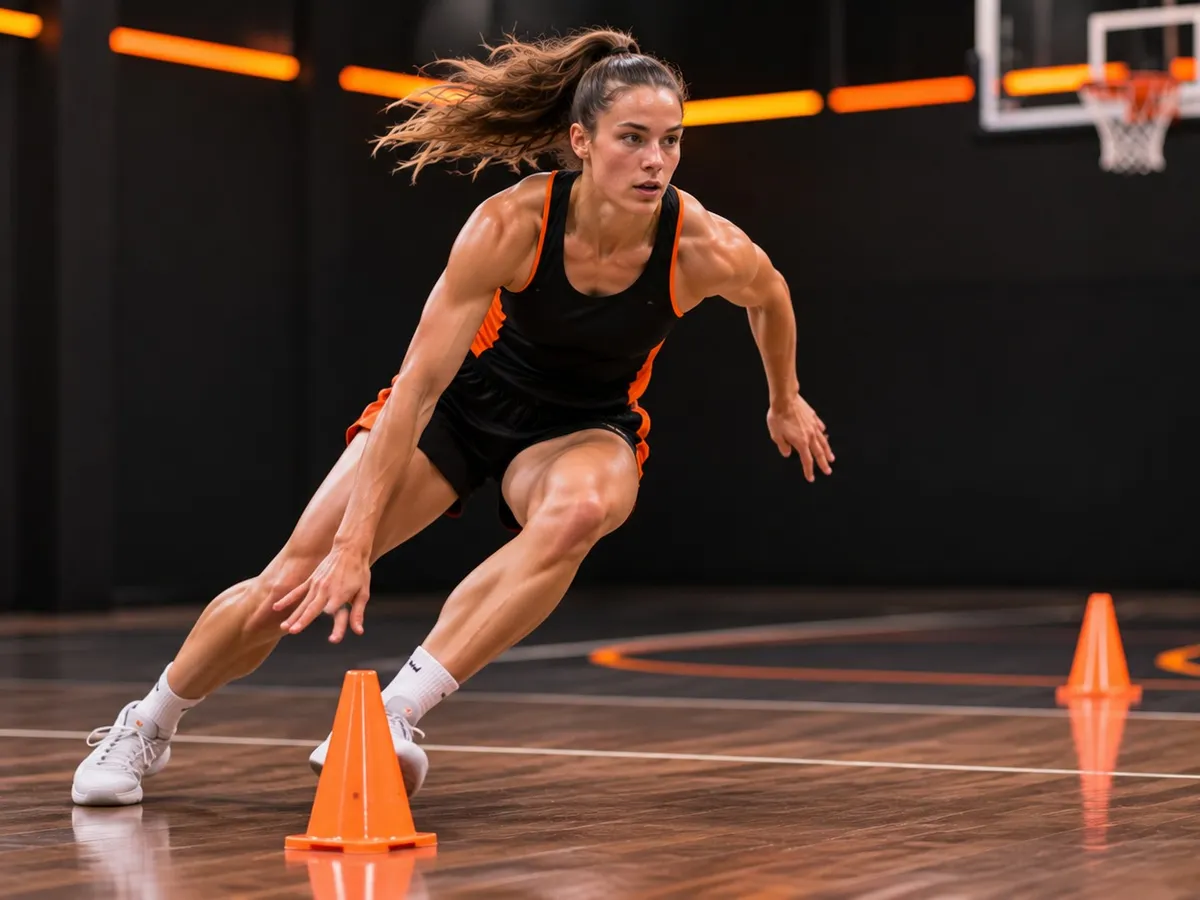
  • A female athlete driving low through a change of direction between orange marker cones on a basketball court.
    Station 7 · Lane Agility

    Lane Agility

    s
    What it is
    Sprint, slide and backpedal around the key.
    Why it matters
    Defensive footwork and changing direction.
  • An athlete reaching down to touch the line beside a marker cone while changing direction in the 5-10-5 agility drill.
    Station 8 · 5-10-5 Agility

    5-10-5 Pro Agility

    s
    What it is
    5 m one way, 10 m back, 5 m to finish.
    Why it matters
    Quick cuts and change of direction.

Your Results

Every measurement from each of the 8 stations is recorded by staff on the day. Once staff have checked everything, your results are released to your Player Card — a snapshot of your key numbers you can view any time, and share.

Your weight is recorded but kept private — staff see it (it's useful context for other measurements), but it never appears on your Player Card or anywhere else you or anyone else can see.

Think a result was recorded incorrectly? Contact us within 14 days of release and we'll review it.

Safety

Every session starts with a group warm-up — don't skip it, even if you've warmed up on your own beforehand.

Have an injury or medical condition staff should know about? There's an optional note for exactly this when you book — see the "Any injury or medical condition staff should know about?" field on the booking page. It's only ever visible to staff, never on your Player Card.

Staff may stop any test if they believe it's unsafe for you to continue — that's not a judgement on you, it's just the right call to make in the moment.

FAQs

Can parents watch?

Yes. There's always space for parents and family to watch from the sideline.

What if I'm sick on the day?

If you can't make it, our Refund Policy covers cancellations.

Can I retest?

Most athletes do quarterly retests, so they can see what's actually changed rather than guessing. Each combine is a separate booking.

How many athletes are in a session?

A new session starts every 30 minutes, with up to 20 athletes in each one. You're on court for about 35–45 minutes. Testing runs across 2 courts — your group starts on the first court and moves to the second as the next group starts, so there's no waiting around.

Ready to get measured?

Book your spot at the next Athlete Combine.